Three months since CDX launched. The token has gone through its initial price discovery, staking has matured, and the protocol is generating consistent revenue. Time to break down the full tokenomics — supply mechanics, distribution rationale, burn dynamics, and how everything connects.
Supply Overview#
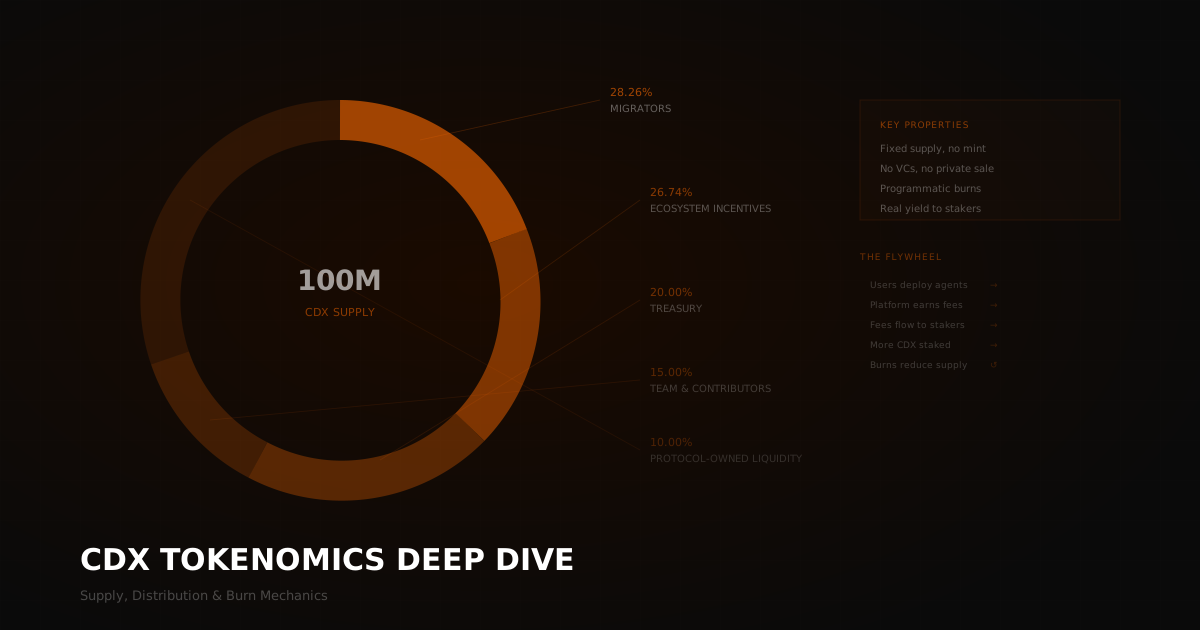
CDX has a hard cap of 100 million tokens. There is no mint function in the contract. No governance proposal can increase supply. What exists today is all that will ever exist.
Distribution Breakdown#
The initial distribution was designed to prioritize existing users and protocol sustainability over speculative capital:
Migrators — 28.26%#
The largest single allocation went to existing platform users. These are people who were using COD3X before the token existed — deploying agents, testing strategies, providing feedback. They earned their allocation through actual usage, not capital.
Ecosystem Incentives — 26.74%#
Reserved for ongoing rewards: staking incentives, agent deployment bonuses, liquidity mining, and community programs. This pool deploys over time based on protocol needs — not all at once.
Treasury — 20%#
Protocol-controlled treasury for operational expenses, strategic partnerships, and ecosystem development. Treasury spending is transparent and subject to governance oversight.
Team & Contributors — 15%#
Allocated to the core team and early contributors with a vesting schedule. The team doesn't dump — vesting ensures alignment with long-term protocol health.
Protocol-Owned Liquidity — 10%#
Permanently owned by the protocol. This liquidity cannot be removed by any individual. It ensures there's always a baseline of tradable liquidity on DEXs, regardless of market conditions.
Revenue Model#
CDX tokenomics only work if the protocol generates real revenue. Here's where it comes from:
Agent Execution Fees#
Every time an autonomous agent executes a trade, the platform takes a small fee. This is the primary revenue driver. More agents, more trades, more revenue.
Platform Subscriptions#
Premium tiers unlock advanced AI models, higher execution limits, and priority agent processing. Credit-based pricing means users pay for what they use.
Cross-Protocol Fees#
When agents interact with external DeFi protocols through chapter integrations, routing fees generate additional revenue.
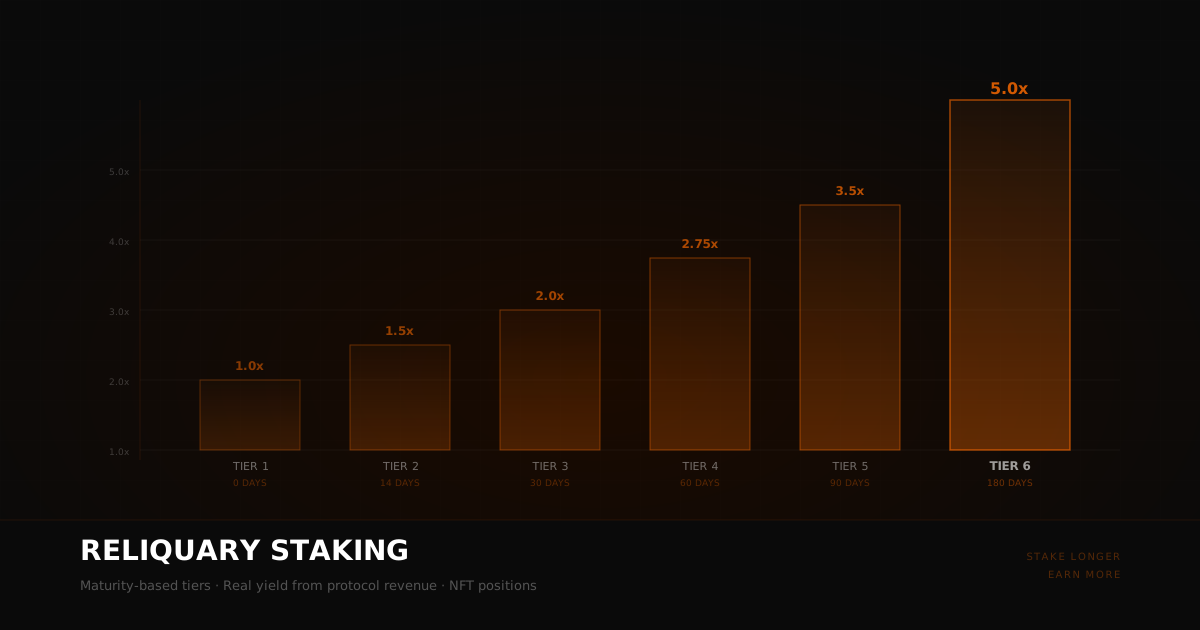
All revenue flows to the staking pool. CDX stakers earn proportionally based on their Reliquary tier.
Burn Mechanics#
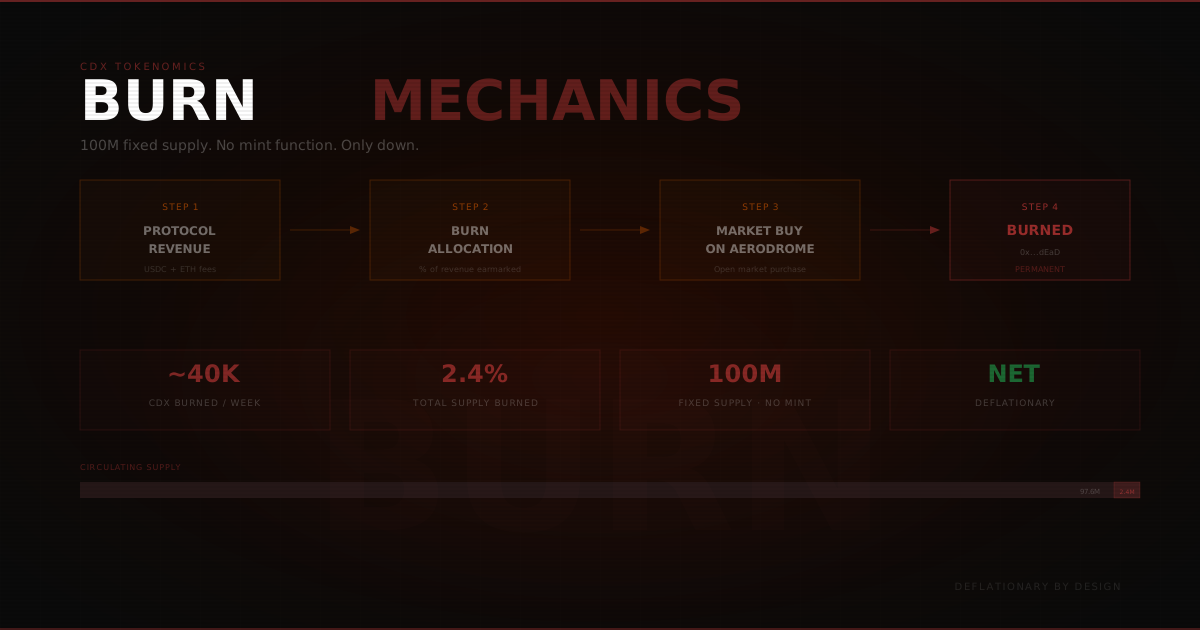
A portion of protocol fees is used to buy CDX from the open market and permanently remove it from circulation. This creates deflationary pressure that compounds over time:
- Protocol earns fees in USDC/ETH
- A percentage is used for CDX market buys
- Bought CDX is sent to a dead address (0x000...dead)
- Circulating supply decreases permanently
The burn rate is proportional to protocol activity. Higher volume = more burns = less supply. This isn't a manual process — it's programmatic and on-chain.
No VC, No Private Sale#
CDX had no venture capital allocation and no private sale. This was a deliberate choice:
- No unlock cliffs — There's no VC fund sitting on 20% of supply waiting for a cliff date to dump
- No information asymmetry — No investor had access to token details before the public
- Aligned incentives — Every token holder is either a user, a contributor, or a liquidity provider
This distribution model trades initial capital raising for long-term alignment. The protocol funds operations through treasury and revenue, not through selling tokens to funds who need a 10x exit.
Price Discovery: February–May 2025#
The first three months of CDX price action tell the story of an organic launch:
- February 19 — ATH at approximately $0.25, driven by DeFAI Summit momentum and staking launch
- March–April — Gradual cooldown as initial excitement normalized
- May 9 — ATL at approximately $0.0175 during a broader market downturn
The ATH-to-ATL range of ~93% is typical for a new token launch without market maker support or VC-backed price defense. What matters is what happens next: sustained protocol development, growing revenue, and a staking system that rewards patience over speculation.
The Flywheel#
When the pieces fit together, CDX tokenomics create a self-reinforcing cycle:
- Users deploy agents → Platform earns trading fees
- Fees flow to stakers → Real yield attracts more CDX staking
- More staking → Less circulating supply, reduced sell pressure
- Burns reduce supply → Remaining CDX becomes scarcer
- Higher CDX value → More attractive for new users → More agents deployed
This flywheel only works with real revenue. Fake yield from emissions creates an illusion that collapses when emissions stop. Real yield from protocol activity creates sustainable economics.
CDX is a fixed-supply token with real yield, maturity-based staking, and programmatic burns. No inflation, no VCs, no shortcuts.