No coding background. Basic understanding of crypto trading. A MetaMask wallet with some capital. Here's how it went from zero to a running agent in 30 minutes.
Step 1: Sign Up (2 minutes)#
Connected MetaMask wallet on cod3x.org. Signed the SIWE (Sign-In with Ethereum) message to prove wallet ownership. Account created. No email required, no password to remember.
Bought a credit pack to fund agent operations. Credits cover AI inference, trade execution, and data access. The dashboard showed the credit balance immediately.
Step 2: Browse Templates (3 minutes)#
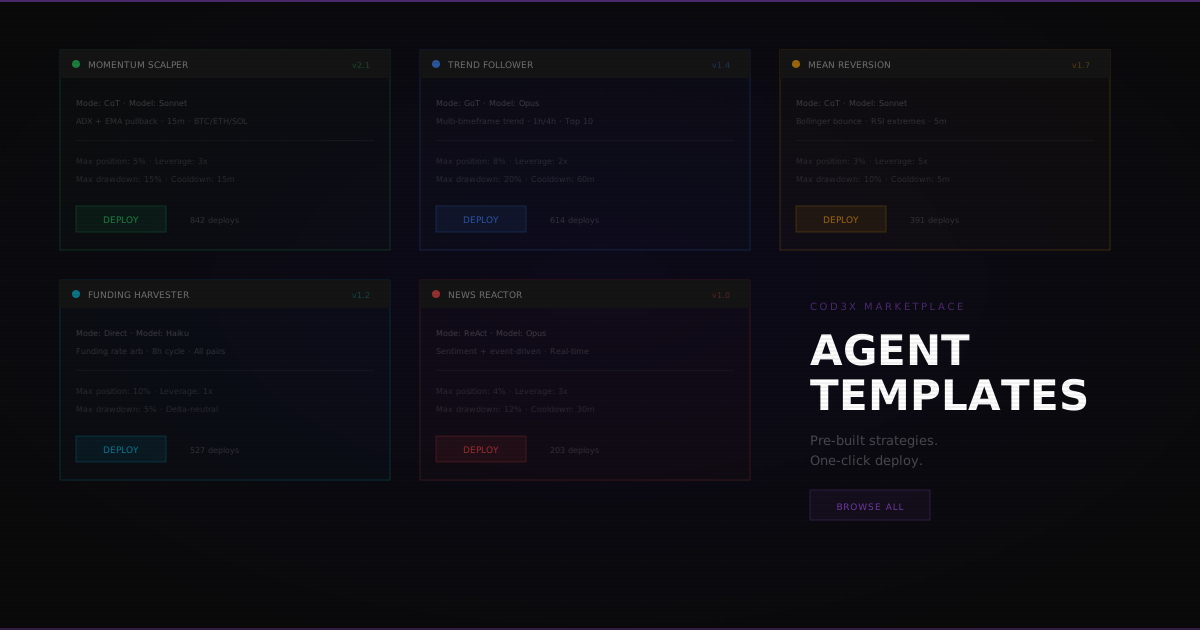
Instead of starting from scratch, opened the template marketplace. Filtered by:
- Strategy type: Momentum
- Timeframe: 15 minutes
- Markets: BTC, ETH, SOL
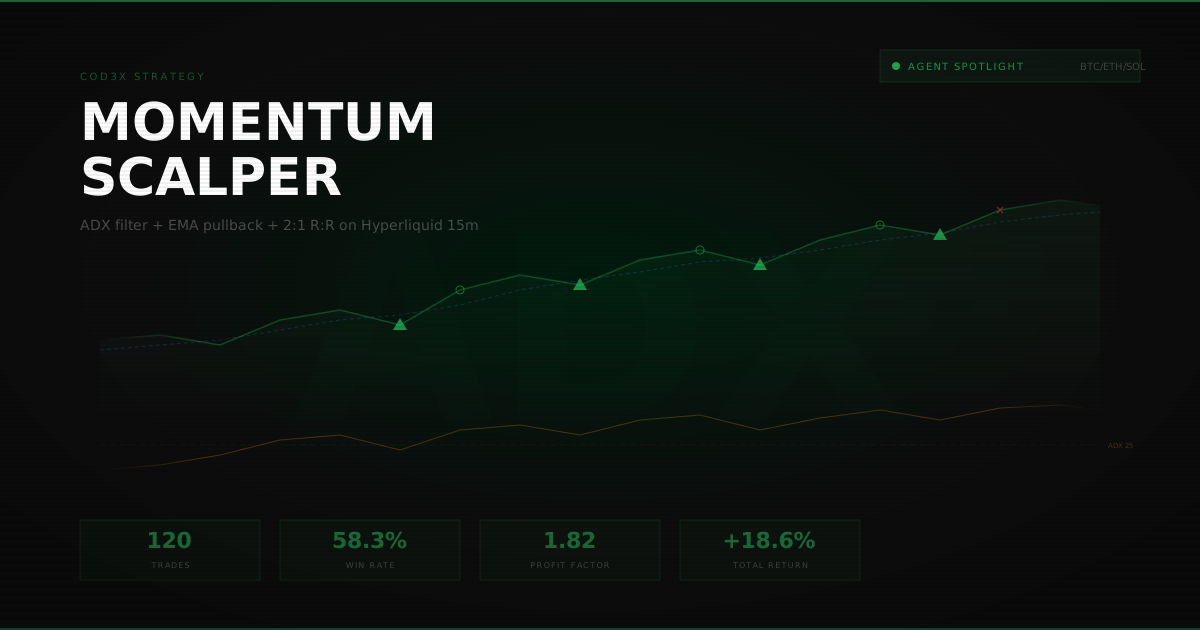
The Momentum Scalper template looked right. Description said it scans for high-ADX trending markets and enters on pullbacks to the EMA. Good reviews. Clear risk parameters.
Clicked "Deploy Template."
Step 3: Customize Risk (5 minutes)#
The template pre-filled everything, but the risk parameters needed adjusting for a smaller account:
All adjustable via sliders and dropdowns. No code. No JSON files. No config syntax to learn.
Step 4: Review the Goal (5 minutes)#
The template came with a pre-written goal prompt:
Scan BTC-PERP, ETH-PERP, and SOL-PERP on the 15-minute timeframe. Look for momentum pullback setups where ADX is above 25 and RSI is pulling back toward the 40-55 zone in an uptrend (or 45-60 in a downtrend). Price should be near the 21-period EMA. Enter in the direction of the trend. Set stop-loss below the recent swing low (longs) or above the recent swing high (shorts). Take-profit at 2:1 reward-to-risk. Close any position open longer than 4 hours.
Read it, understood it, left it unchanged. The goal was clear and matched the strategy description.
The reasoning mode was set to Chain-of-Thought — the agent would write out its analysis step by step before deciding. Good for reviewing decisions later.
Step 5: Backtest (10 minutes)#
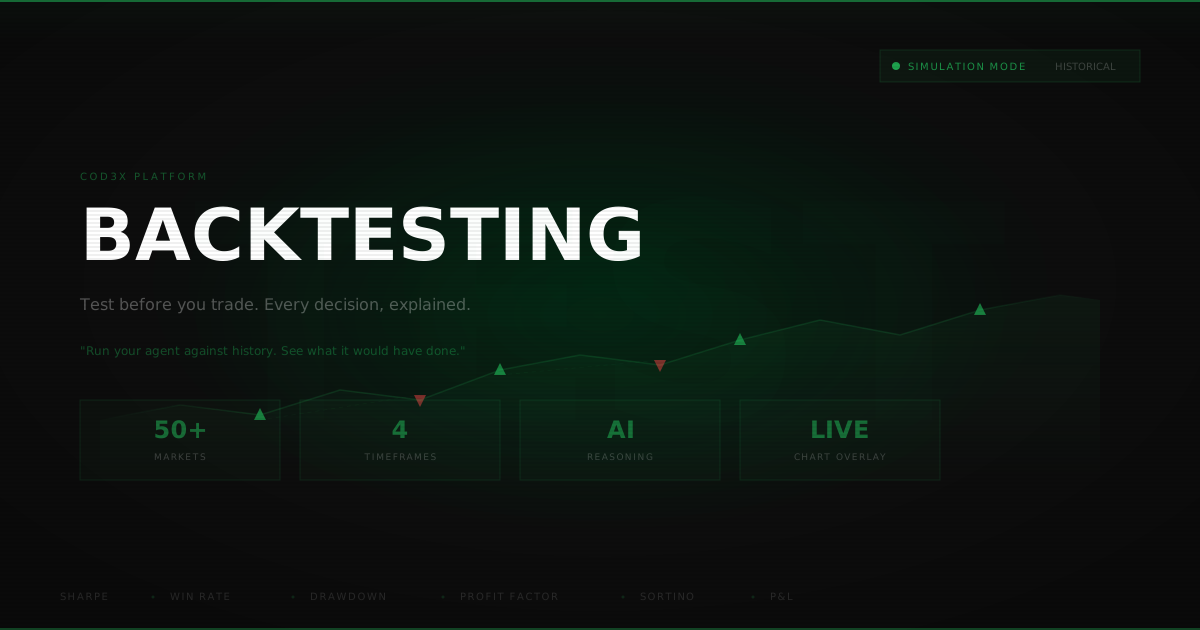
Before risking real money, ran a backtest against 3 months of historical data. Configuration:
- Date range: September–November 2025
- Initial balance: $500 (matching planned live capital)
- Historical context: 50 candles per decision
The system estimated the backtest would cost about 45 credits. Clicked "Run."
Watched the backtest execute in real-time — each decision appeared with the AI's reasoning chain. After about 8 minutes:
Not spectacular, but profitable. The win rate was above 50%, the profit factor was solidly above 1.0, and the max drawdown stayed within tolerance. Good enough to go live with a small amount.
Step 6: Deploy (2 minutes)#
Clicked "Deploy Agent." Connected Hyperliquid account through the venue setup flow. Allocated $500 initial capital.
The agent went live. Dashboard showed:
- Agent status: Active
- Next goal check: 15 minutes
- Credit balance: sufficient for ~200 goal runs
- Open positions: 0
Step 7: Monitor (3 minutes to set up, then ongoing)#
Set up monitoring:
- Dashboard — Real-time position display, PnL chart, goal execution log
- Alerts — Browser notifications when a trade opens or closes
- Daily summary — Configured a daily recap email with PnL, trade count, and credit usage
The goal execution log showed every decision the agent made — including times it analyzed the market and decided not to trade. Those "hold" decisions were as important as the trades.
First Month Results#
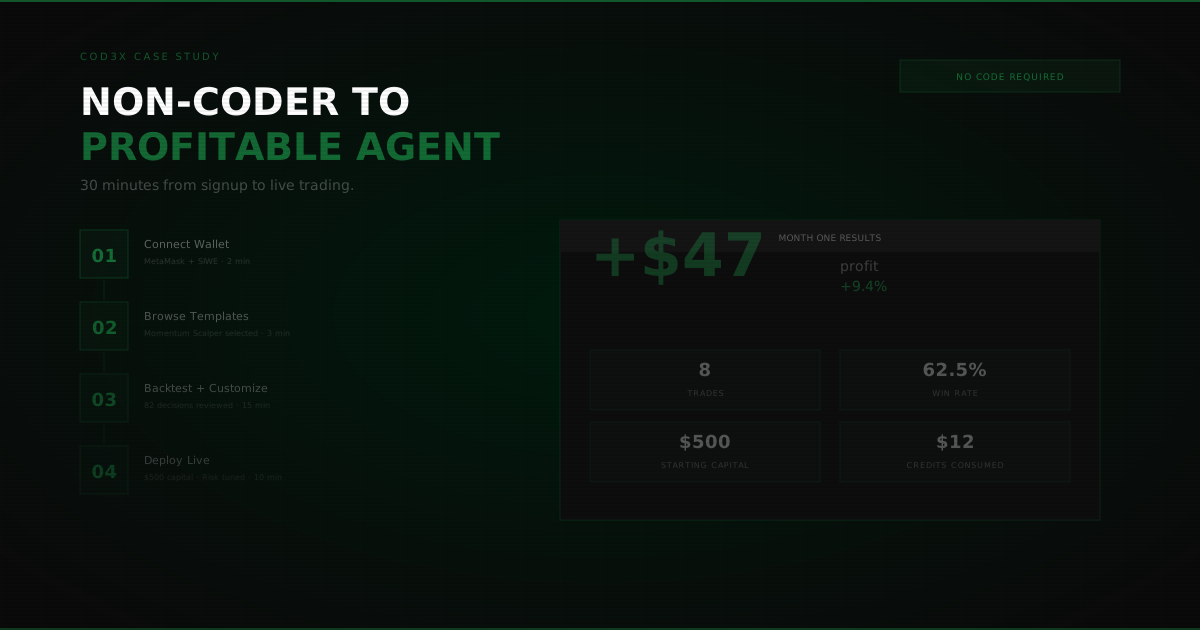
Eight trades in a month means the agent was selective — which is what the ADX filter is designed to ensure. Five winners at an average of +1.8% and three losers at an average of -1.1% gave a healthy 1.6 profit factor, consistent with the backtest.
What I Learned#
Templates eliminate the cold-start problem. Without the Momentum Scalper template, I would have spent hours figuring out goal syntax, trigger conditions, and risk parameter interactions. The template gave me a working agent in minutes.
Backtesting builds confidence. Seeing the agent make 82 decisions on historical data — and reading the reasoning behind each one — made it much easier to trust it with real capital.
Risk parameters are more important than strategy. My two adjustments (reducing leverage from 3x to 2x and tightening max drawdown from 15% to 10%) meant the agent took smaller positions and stopped sooner on losing streaks. The returns were lower than the template's backtest, but the drawdown was also lower. Worth it.
Chain-of-Thought is worth the extra credits. Being able to read why the agent passed on a trade is as valuable as understanding why it took one. Direct mode would have been cheaper but I'd have no idea what the agent was thinking.
30 minutes is realistic. From wallet connection to live agent. The longest step was backtesting (10 minutes for the simulation to run). Everything else was clicking through the UI.
No code. No experience. 30 minutes from signup to live agent. $500 starting capital, $47 profit in the first month, and a full log of every decision the AI made along the way.