We killed the subscription model.
COD3X used to charge a flat monthly fee. Pay $X per month, get access to the platform, run your agents. The problem: it was wrong for almost everyone.
Heavy users — the ones running multiple agents across venues, executing hundreds of trades per day — were massively underpriced. They consumed 50x the compute of an average user and paid the same flat fee.
Light users — someone experimenting with a single agent, running a few trades per week — were overpaying for capacity they'd never use. The subscription felt expensive relative to what they actually consumed.
We replaced it with credits.
How Credits Work#
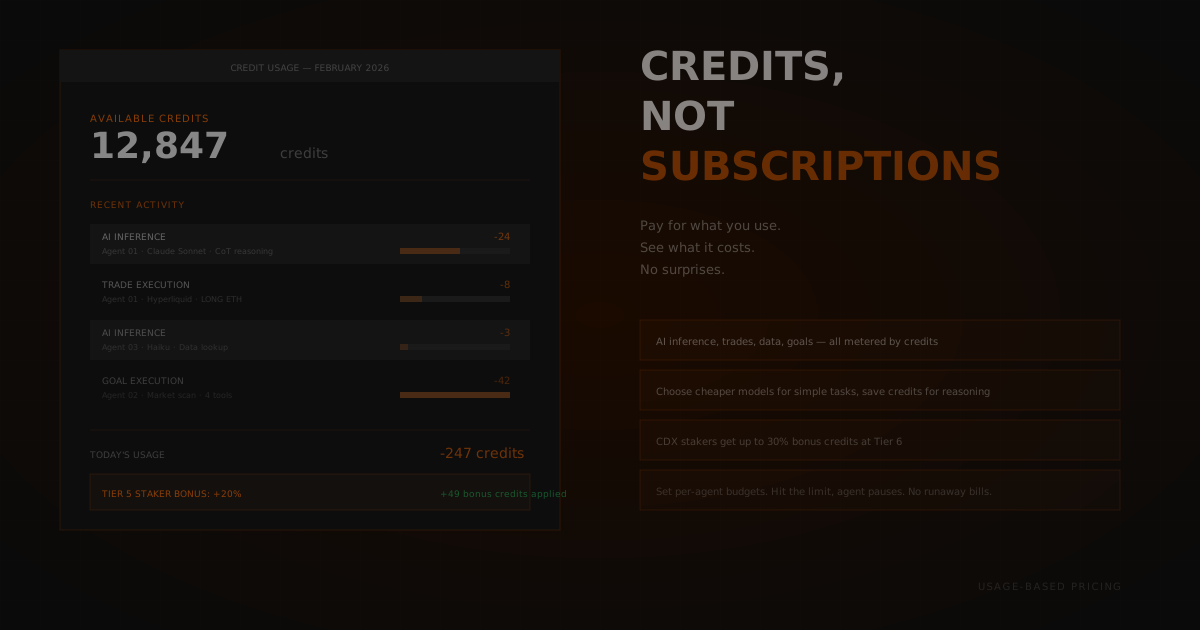
Credits are the unit of account for everything that costs compute on COD3X:
- AI inference — Each agent reasoning cycle consumes credits based on the model used and token count
- Trade execution — Each order submission, modification, or cancellation consumes credits
- Data access — Premium data feeds and historical data backfills consume credits
- Goal execution — Each goal run consumes credits based on complexity and tools invoked
You buy credits up front and spend them as you go. No recurring charges. No surprise bills. You see exactly what each action costs before it happens.
Why Credits Work Better#
Usage-Aligned Pricing#
You pay for what you use. An agent that runs one goal per day costs less than an agent running continuous scans. A simple direct-mode agent costs less than a graph-of-thought agent evaluating four strategies in parallel.
This alignment means:
- Beginners can start cheap and scale up as they learn
- Power users pay proportionally to the value they extract
- Dormant agents cost nothing — credits only burn when agents act
Model Choice Impacts Cost#
Different AI models have different credit costs:
- Fast, lightweight models (for data lookups, simple classification) — Low credit cost
- Reasoning-heavy models (for complex trade analysis, multi-step planning) — Higher credit cost
- Frontier models (latest, most capable) — Highest credit cost
This creates a natural optimization loop: use the cheapest model that's good enough for each task. Per-tool model selection (assign different models to different tools within one agent) lets you minimize credit burn without sacrificing quality where it matters.
Transparent Accounting#
Every credit expenditure is logged with:
- What action consumed it
- Which agent and goal
- Which AI model was used
- Exact token counts and compute consumed
No black box pricing. You can audit exactly where your credits went and optimize accordingly.
Credit Tiers#
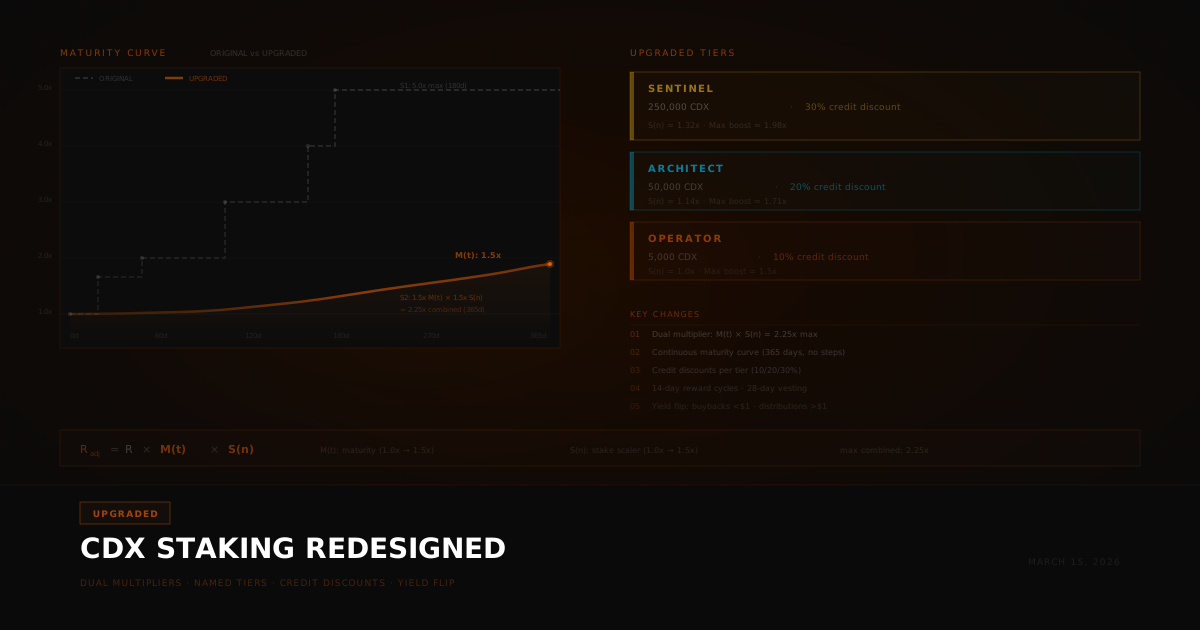
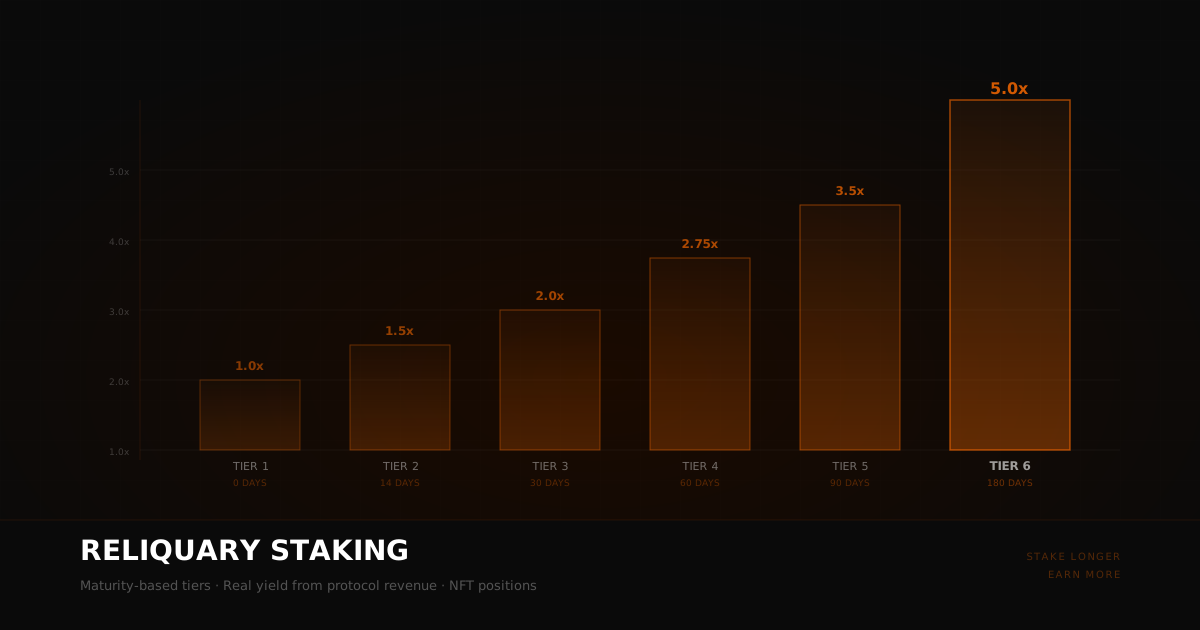
CDX stakers get credit bonuses based on their Reliquary tier:
This ties the tokenomics directly to platform usage: stake CDX, get more compute for your money, run more agents, generate more platform revenue, which flows back to stakers.
The Migration#
Existing subscribers were migrated automatically:
- Remaining subscription time was converted to equivalent credit balances
- No one lost access or paid twice
- Credit balances don't expire
For new users, credits are available for purchase directly. No minimum commitment, no lock-in, no recurring charge.
What This Changes#
For the Platform#
Credit-based pricing means revenue scales with usage. As agents execute more trades and consume more compute, the platform earns proportionally. This is healthier economics than a flat subscription where heavy users are subsidized by light users.
For Users#
Total cost transparency. You know the cost of every action before it happens. You can set credit budgets per agent, per goal, or per time period. Agents that hit their budget automatically pause — no runaway bills.
For CDX Holders#
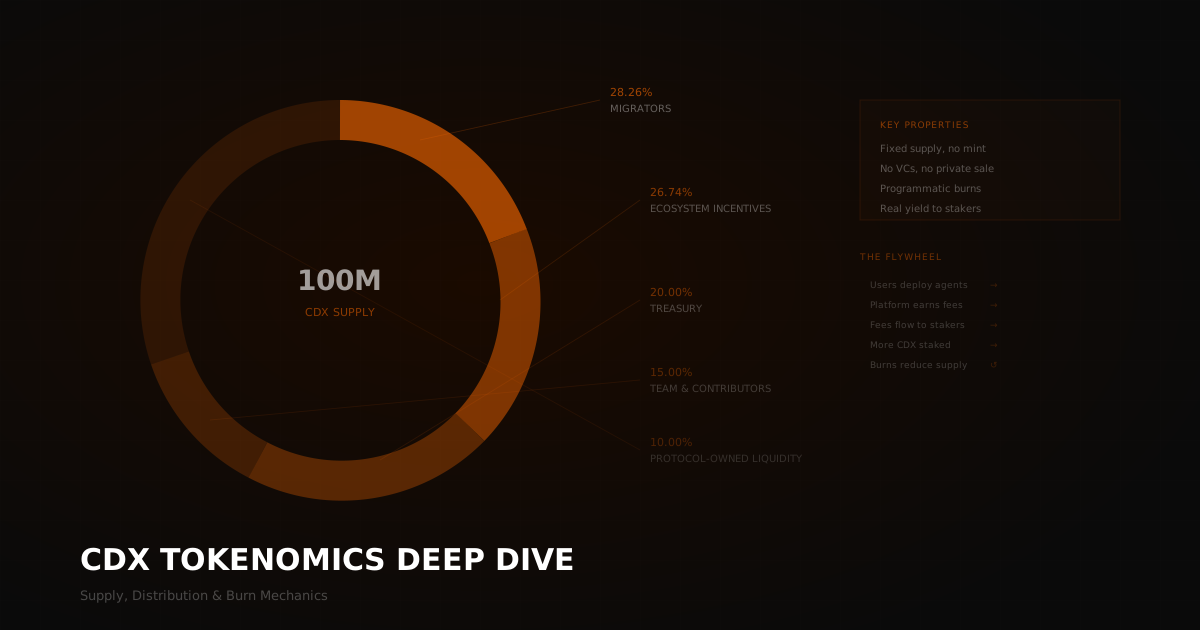
Credits create another demand driver for CDX. Higher staking tiers unlock credit bonuses, making staking more attractive for active users. More staking reduces circulating supply. More platform usage generates more revenue for stakers. The flywheel strengthens.
Credits are live on COD3X. Pay for what you use, see what it costs, optimize with AI model selection. No subscriptions, no surprises.