Every crypto narrative follows a cycle. AI tokens on Base are no exception — but this cycle has unique structural properties that separate it from the meme coin playbook. Understanding where we are in the cycle, what drives each phase, and what separates projects that survive from those that don't is the difference between riding momentum and being exit liquidity.
The Four Phases#
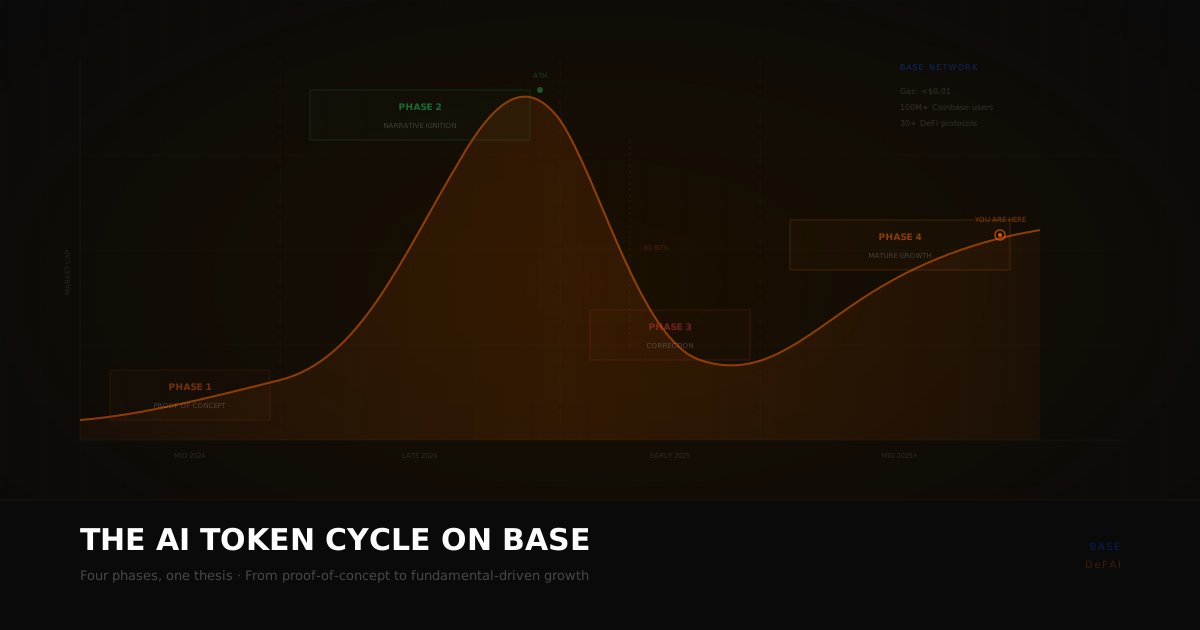
AI tokens on Base have moved through four distinct phases since mid-2024, each with different market dynamics, participant profiles, and risk/reward characteristics.
Phase 1: Proof of Concept (Mid–Late 2024)#
The first wave was small, experimental, and largely ignored by mainstream crypto. Teams shipped AI agents that could execute basic on-chain operations — swaps, simple yield strategies, automated DCA. Most tokens launched with minimal liquidity and no CEX listings.
Key characteristics:
- Sub-$10M market caps with thin liquidity pools
- Buyers were technical users who understood what the agents actually did
- Token utility was real but narrow — access to agent execution, staking for priority
- Most projects had working products before tokens existed
This phase filtered hard. Projects without functional agents died quickly because there was no narrative momentum to sustain pure speculation. The survivors built real users.
Phase 2: Narrative Ignition (Late 2024–Early 2025)#
When the "DeFAI" narrative caught fire — culminating in events like the DeFAI Summit — everything changed. AI tokens went from niche to main stage overnight. Base's low fees made it the natural home for high-frequency agent operations, and the ecosystem exploded.
Key characteristics:
- $50M–$500M market caps became common for leading projects
- Narrative buyers flooded in — many couldn't explain what the agents actually did
- Token launches became events, with coordinated marketing campaigns
- "AI agent" became a label applied to everything, diluting the category
The danger in Phase 2 is always the same: prices move faster than fundamentals. Projects that shipped real products in Phase 1 saw massive price appreciation. But so did projects that had nothing but a whitepaper and a Telegram group.
Phase 3: Correction and Consolidation (Early–Mid 2025)#
The inevitable cooldown. AI token prices corrected 60–80% from Phase 2 peaks. The narrative tourists left. Trading volume dropped. CT moved on to the next thing.
Key characteristics:
- Massive drawdowns across the board — good projects and bad projects alike
- Funding dried up for projects that hadn't shipped product
- The teams that kept building gained market share while competitors went quiet
- TVL and usage metrics became the primary differentiators
Phase 3 is where the actual market structure forms. Projects with real revenue, real users, and real utility retained a base of holders. Projects that were pure narrative plays lost 90%+ and never recovered. The correction wasn't a failure of the AI token thesis — it was the market correctly repricing speculation vs. fundamentals.
Phase 4: Mature Growth (Mid 2025–Present)#
The current phase. AI tokens on Base have settled into a more rational market structure where price tracks product development, usage growth, and revenue generation rather than pure narrative momentum.
Key characteristics:
- Valuations tied to fundamentals — protocol revenue, TVL, active agents, transaction volume
- Institutional and strategic capital replacing retail speculation
- Cross-chain expansion (Base projects deploying on Arbitrum, Solana)
- Consolidation — top projects acquiring or integrating smaller ones
What Makes Base Different#
The AI token cycle on Base has structural properties that differentiate it from previous crypto cycles:
Low Fees Enable Real Usage#
Base's sub-cent transaction costs mean AI agents can actually operate profitably. On Ethereum mainnet, a simple swap costs $5–20 in gas. An agent that makes 50 decisions per day would burn $250–1000 daily in gas alone — making most strategies unprofitable. On Base, that same agent spends less than $1.
This is not a minor point. Low fees transform AI agents from demos into production systems. The tokens backed by agents that run profitably on Base have a fundamentally different value proposition than tokens backed by agents that can only afford to run on testnets.
Coinbase Distribution#
Base has something no other L2 has: direct access to Coinbase's 100M+ user base. As Coinbase integrates Base more deeply into its consumer products, AI tokens on Base get organic distribution that doesn't exist on Arbitrum or Solana. This isn't theoretical — onchain activity from Coinbase wallet users has steadily increased throughout 2025.
Composability Density#
Base has attracted a critical mass of DeFi protocols — Aerodrome, Uniswap V3, Aave V3, Moonwell, Pendle, and dozens of others. For AI agents, composability density matters: the more protocols available on the same chain, the more complex and profitable the strategies agents can execute without bridging.
Where We Are Now#
As of early 2026, the AI token cycle on Base is in a mature growth phase. The projects that survived the Phase 3 correction are shipping product, generating revenue, and expanding cross-chain. Valuations are more rational, liquidity is healthier, and the buyer base is more sophisticated.
The opportunity isn't gone — it's just different. Phase 2 was about catching the narrative wave early. Phase 4 is about identifying the projects with the strongest fundamentals and the longest runway. The returns may be less explosive, but the risk of total loss is dramatically lower.
What to Watch#
- Protocol revenue trends — Is revenue growing month-over-month? Flat revenue means stagnant product-market fit
- Agent deployment numbers — More agents = more protocol activity = more fee generation
- Cross-chain expansion — Projects that successfully deploy on multiple chains have proven their architecture scales
- Partnership quality — Integration partnerships with major DeFi protocols signal institutional validation
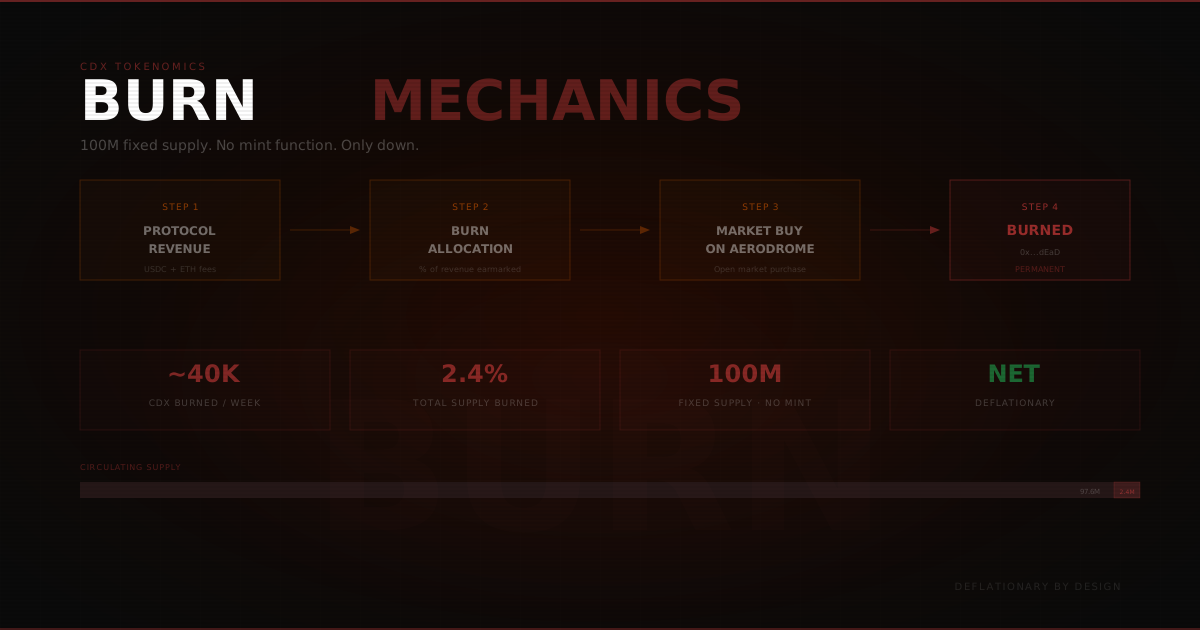
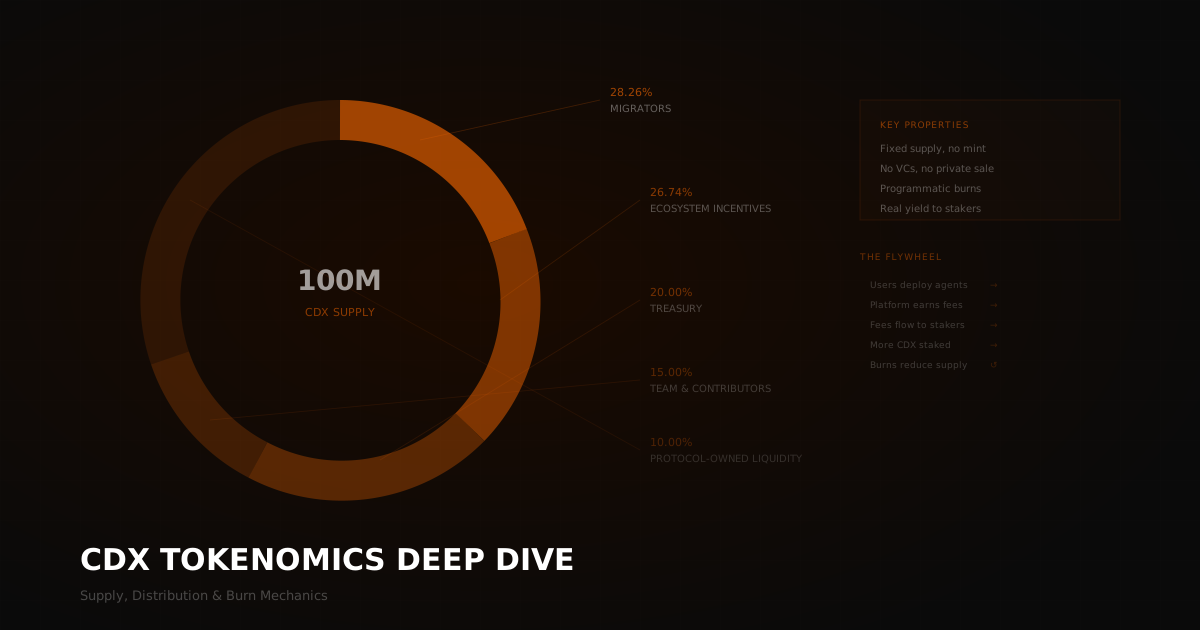
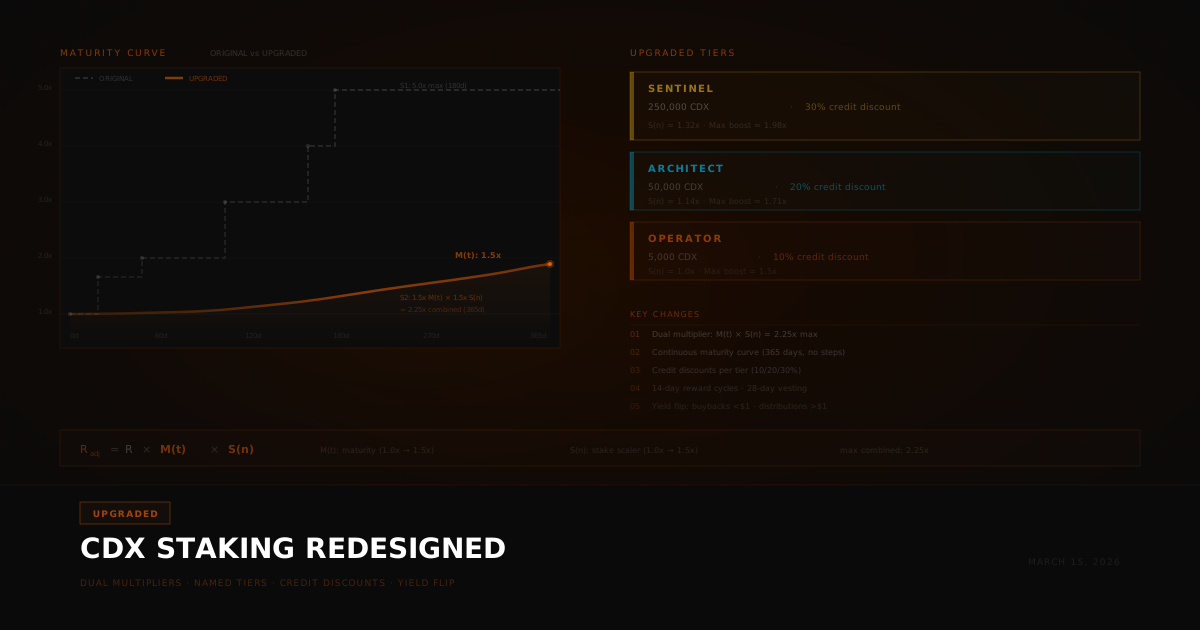
- Token supply dynamics — Burn mechanisms, staking lock-ups, and emission schedules all affect price structure
The Bigger Picture#
The AI token cycle on Base isn't just another crypto narrative rotation. It represents a genuine shift in how DeFi protocols operate — from manual human interaction to autonomous agent execution. The tokens that survive and thrive are the ones attached to platforms that make this shift real, not just theoretical.
Base's combination of low fees, Coinbase distribution, and composability density makes it the natural home for this transition. The cycle will have more corrections, more narrative shifts, and more shake-outs. But the underlying trend — AI agents becoming the primary users of DeFi protocols — is structural and accelerating.
The AI token cycle on Base has moved past pure speculation into fundamental-driven growth. The projects that shipped through the correction are now defining the category.
Disclaimer: This article is for educational and informational purposes only and does not constitute financial, investment, or trading advice. Nothing in this post should be interpreted as a recommendation to buy, sell, or hold any token or digital asset. Cryptocurrency markets are highly volatile and carry significant risk — you may lose some or all of your investment. Always conduct your own research and consult a qualified financial advisor before making any investment decisions. COD3X and its contributors are not liable for any losses incurred from acting on the information presented here.